

We are Greater Cincinnati’s nonprofit devoted to positively changing lives in the fight against HIV/AIDS.
Through HIV prevention, housing and care, our work to end the HIV epidemic is essential to a healthy community.
Hepatitis C is a viral infection caused by the hepatitis C virus (HCV) that leads to liver inflammation. Over time, it can result in serious conditions like cirrhosis, liver cancer or even liver failure, which may be life-threatening.
While some people experience only a short-term (acute) illness, about 70% develop a long-term (chronic) infection.
The newer direct-acting antiviral (DAA) medications have fewer side effects than older treatments. Most people tolerate hepatitis C treatment well, but some may experience mild side effects like fatigue, headache, nausea or trouble sleeping.
Hepatitis C is often called the “silent infection” because many people don’t show symptoms for years. If symptoms do appear, they can take 2 weeks to 6 months to develop after exposure.
Symptoms are flu-like and may include fever, fatigue, body aches, joint pain, and loss of appetite. Some individuals may also experience jaundice or clay-colored stools.
Chronic hepatitis C often has no symptoms for years until liver damage occurs.
Hepatitis C spreads when blood infected with HCV enters the bloodstream of someone who isn’t infected.
People who:
Direct-acting antiviral medications can be costly, but most government and private health insurance plans cover them.
Medicaid no longer requires sobriety to access Hepatitis C treatment, allowing active drug users to receive care. However, some private physicians may still require sobriety, which may make finding treatment more challenging.
Sexual transmission is rare unless blood is present during intercourse, such as through rough sex or a blood fetish.
Yes! Sharing razors or other personal hygiene items such as toothbrushes or hair/nail clippers that may have small amounts of blood on them can spread hepatitis C. It’s always best to use your own personal care items when possible.
Diagnosis involves two steps:
Yes, Hepatitis C can be cured with medication.
About 30% of people naturally clear the virus within six months without treatment. The remaining 70% develop chronic infection, with 15-30% at risk of cirrhosis within 20 years.
Yes, reinfection is possible after treatment. Preventing reinfection involves following recommended prevention strategies.
Balanced meals can support liver health. Certain foods and drinks are beneficial, while others should be avoided.
Hep C Helpers:
Hep C Enemies:
Avoid exposure to the virus. Prevention methods include:
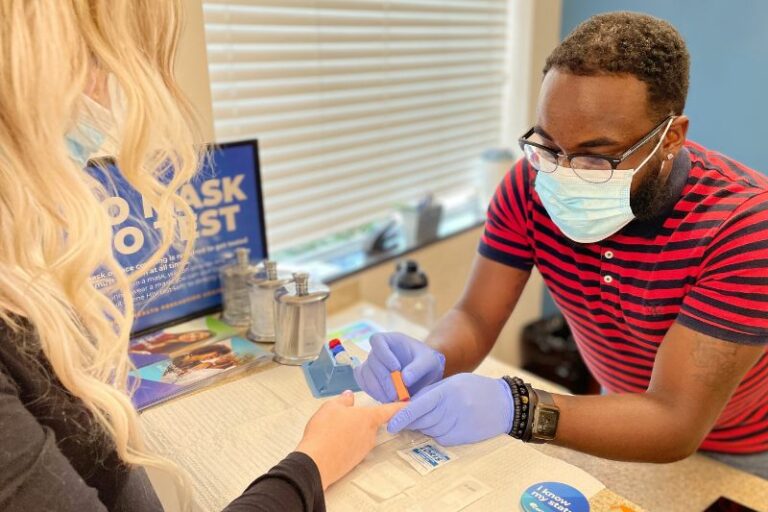
Yes. We offer free, fast and confidential testing for HIV and hepatitis C in-person at our office, throughout the community on our testing van or at community events. You can also pick up an HIV self-testing kit from our Northside office, our vending machine or request one by mail for use at home or in any private location to find out your HIV status.
To help our Peer Navigators understand your needs, please share a little about what you’re looking for: